Post Category:

Long term

A book in snippets

Here’s an idea I’ve recently implemented. A few times this week I’ve had to wait unexpectedly. (You can probably guess I’m waiting to have my hair cut right now)

With only my phone, I want to make use to that time beyond checking emails or (god forbid) scrolling social media.

I now make sure I always have something I can chip away at that is on my phone, something that means I can shovel that unused time into a task that compounds. There’s a book I have loaded on my phone that is not a priority read, BUT I do want the goods in my brain. So that has become my way of investing the snatched moments here and there. What should you choose?

Here are some key characteristics to help you choose a task:

-Should be on your phone (as it’s always with you)

-It should take minimal brain power to leap back in

-It should be able to be done in little snippets

-It should contribute to a long term goal

-It shouldn’t be urgent

I’ve been surprised at how often I find myself with these moments. It may well be the secret to success.

Action is identity

Aristotle said that we are what we repeatedly do.

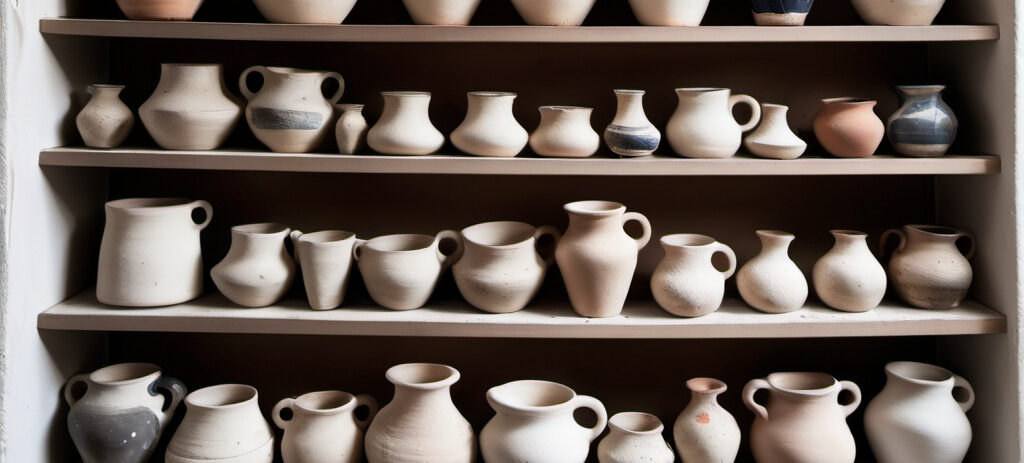
It’s a lot easier to identify as a writer if you write every day. You can call yourself a potter, but if you make one pot a year you might feel a bit like you’re lying to yourself.

A potter, by definition, makes pots.

A filmmaker makes films.

An actor acts.

You get the idea.

If you want a certain identity, your actions have to be in congruence with it. Not for anyone else, but just for you.

Consistency builds congruence.

James Clear said every time we act in accordance with who we want to be, we cast a vote for that identity.

You can proclaim an identity

Or you can be your identity through the actions you take consistently. Identity isn’t static it’s in your movemennt.

Who do you want to be? And what are you going to do about it?

The big thing & the little thing

The big thing is the dream. Your grand vision, the 10 year goal, the 1 year milestone, the six month outcome.

These are important. They fuel us and they provide us the clarity of direction only a finely tuned compass can.

We go this way, not that way.

We need the big things. We need to dare to dream big- boldly- and look at those dreams often.

But-

…and it’s a little but…

We need the little things. The little things are the steps along the way.

What am I focussing on this month toward the big thing? What am I doing this week? Today?

Ask yourself these questions.

What is the big goal I am heading toward and how are my actions this week taking me there?

These are pointy questions. It’s that way on purpose. They clarify the major outcome (the big thing) and make it searingly obvious if what you’re doing now (the little thing) is actually connected.

It draws a bold line to what you’re doing now to where you want to be. Like a long bridge arching into the morning mist.

We don’t have to be certain the little things will work- just that they are the best we’ve got right now.

Keep asking this question of the little things and you’ll get to the big thing.

More is more

I sometimes have the urge to save my best ideas. I get an idea and I say to myself something along the lines of ‘oh that’s great! I’ll save it for when I’m more well known, have enough budget, the right team…’

A great idea for a scene and I’ll save it for a feature film.

The new song I think I could write. I can make that when I have the whole album.

That character I’d like to play in a show one day.

The film, the album and the show don’t exist yet; but the idea does.

I understand the fear: good ideas are scarce! Only a few come around.

It’s not true. It isn’t. The more ideas I have and use, the more come to me. It’s win win, the thing gets made and I get more ideas.

The belief that you have to hoard ideas because they’re scarce is self fulfilling.

The belief that great ideas are abundant is too (I know which I’d choose).

There’s sometimes the argument of quality. Sure it could be better if you waited, but as Mark Duplass said, I’d rather have a film made for certain now rather than one that might be made in the future. This is the opposite of the “one donut now or two donuts later” thing. We’re usually rewarded for waiting. For delaying gratification. But this is different. You’re letting your art die now for the empty promise of tomorrow.

It still doesn’t mean you do a bad job- you do your best. You’re probably not as good as you want to be. You certainly won’t get better by not making a thing, or only making your mediocre ideas a reality and not sharing your work. Thats how you get better.

Use your best. Do your best. And move on

Capturing Magic

Here’s a little exercise I’ve done the last few years on New Year’s Eve.

1.List all your favourite times of the year.

      These can be long stretches or little snapshots- anything you think back on fondly from the year gone. For me one year I had a certain month travelling during winter where I was in an excellent flow with my creative work. Then there was this walk I took with my mum. I also had a sweet conversation with my niece on a log on a beach at sun set. And I really enjoyed being on tour for a show. And reading a particular book over croissants. As you can see there’s no upper or lower limit to the things you can list. The idea here is to capture the magic.

      2.List the commonalities

        What are some of the overarching themes in these experiences? Using the above, I found that spending time away from home to complete creative tasks was good and enjoyable for me. Being in nature with people I love. Having a good fiction book on the go.

        You should then have a pretty specific and juicy list of things that ensure you enjoy your experience of life! The idea is you can curate and plan your upcoming weeks and months using these themes as guides for how you spend your time.

        You can also do the same exercise for the opposite-

        1. What are times you didn’t enjoy this past year?
        2. What are the commonalities?
        3. How can ensure you don’t experience these this year?

        Latency

        When you’re speaking on a microphone and wearing headphones, you can hear your voice at the exact same time as you are speaking. It’s a strange sensation at first, but for me it’s a really useful tool of monitoring and adjusting what I’m doing with my voice. I get to hear the eventual output live and that lets me adjust and learn on the fly.

        If you try and do this with a set of bluetooth headphones, you’ll run into a problem called latency. This is when you speak and a split second later you hear your voice.

        The most annoying split second to ever exist. You can quickly drive yourself nuts.

        Latency removes our ability to course correct. We hear the result after we make the noise.

        It’s rare that we see the effects of our actions immediately. In life there exists a latency; a kind of lag between something we do and the result it yields. Latency is challenging because we can’t know if what we are doing is working. But at the very least knowing about life’s tendency for latency will remind us to wait a little bit longer before we give up.

        Don’t give up too early; what you’re doing may well be working, there may just be a lag. Victory might be just around the corner.

        That said, here’s an idea I stole from my mentor…

        How to beat latency:

        Do something 100 times or 100 days straight- then look up and see where you are.

        Don’t get bored on the way

        They say good things come to those who wait.

        That good things take time. And that the watch pot doesn’t boil.

        In this life, the things we really want take hard work, or at least a lot of work over a long period of time. It seems to me that other than simply putting work into the things we wish to improve, our only other job is to not get bored on the journey to get there.

        How can we take pleasure in the incremental steps? How can we simultaneously concentrate on quality and focus on the small steps while remaining connected to the grand vision?

        Persistence is showing up consistently.

        Persistence requires vision.

        Consistency requires attention to detail.

        Both require patience.

        Patience can slump into boredom…

        Success, then, isn’t always a Herculean effort of brute strength or divine inspiration, but rather a gentle meditation in holding the line and staying on the path.

        Don’t get bored on the way

        Useful, inspiring and cool things

        Join my newsletter